



The rise of blockchain technology has introduced a radical new form of organization: the Decentralized Autonomous Organization (DAO). A DAO is a leaderless, member-owned organization governed by a set of rules encoded in a smart contract on a blockchain. It operates without the need for a central authority, such as a CEO or a board of directors, and its members collectively vote on proposals to manage the organization’s treasury and operations. This revolutionary structure has the potential to redefine how businesses are run, from venture capital funds and creative collectives to charity foundations and open-source projects.
However, as DAOs have moved from a theoretical concept to a commercial reality, they have collided with a fundamental and unresolved legal challenge: their legal status. The existing legal frameworks, which are built on centuries of corporate and partnership law, are a poor fit for a decentralized, pseudonymous, and code-based structure. The legal vacuum surrounding DAOs has created a complex web of legal, tax, and liability risks that pose a significant hurdle to mainstream adoption. The outcome of the legal battles over DAO legality will not only shape the future of Web3 but will also determine whether these innovative structures can fulfill their promise of a decentralized and more democratic future. This article will provide a comprehensive guide to the concept of DAOs, the key legal challenges they face, the diverse global approaches to regulation, and the path forward for building a legal bridge between code and law.
What is a DAO?
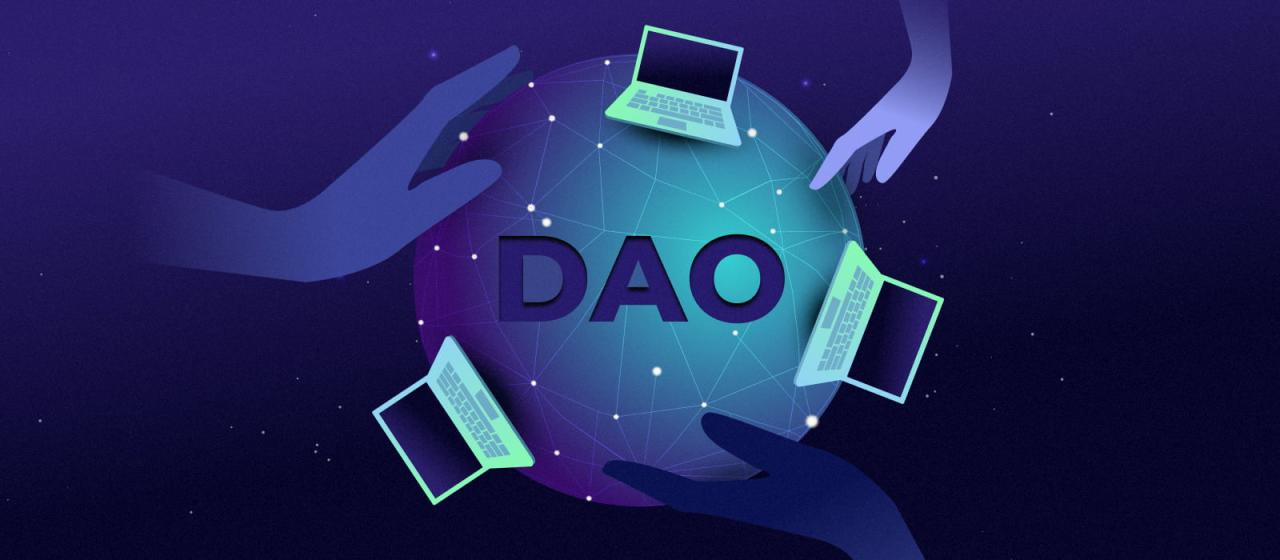
To understand the legal challenges, one must first grasp the core concepts of a DAO. A DAO is, at its heart, a digital cooperative governed by its code and its members. It is a fundamental departure from the traditional corporate model.
- Smart Contracts and On-Chain Governance: The rules of a DAO are written in a smart contract—a self-executing agreement with the terms of the deal between buyer and seller being directly written into lines of code. The smart contract defines everything from how new members are admitted to how a proposal is passed. Members vote on these proposals by using a governance token, and the result of the vote is recorded on a public, immutable ledger (the blockchain).
- Decentralized and Permissionless: A DAO can be created by anyone, anywhere, with no need for a legal filing or a central authority. Its decentralized nature means that it is not subject to the jurisdiction of a single country or a single legal system.
- The Lack of a Legal Identity: Unlike a traditional corporation, which is a legal entity recognized by a state, a DAO has no legal identity. It cannot enter into a contract, it cannot be sued, and it cannot be held liable for its actions. This lack of a legal identity is the source of many of its legal challenges.
- Collective Ownership: The members of a DAO collectively own the organization, and they have a direct say in its governance. This is a fundamental departure from the corporate model, where shareholders vote for a board of directors, who then manage the company. In a DAO, the members are the board.
The Core Legal Challenge
The legal system is struggling to classify and regulate a DAO because its structure defies traditional legal definitions. The law is not equipped to deal with a leaderless, decentralized organization that operates on a global scale.
- The Problem of Liability: In a traditional corporation, the legal entity—the corporation—is liable for the actions of its employees and its board of directors. A shareholder’s liability is limited to the amount of their investment. In a DAO, however, there is no legal entity. This raises the question of who is liable for a DAO’s actions. If a DAO’s smart contract is exploited and a member loses their funds, can they sue the DAO? The answer is no, because the DAO has no legal identity. This can leave victims with no legal recourse.
- The Problem of Enforcement: Even if a court issues a verdict against a DAO, how is that verdict enforced? A court cannot seize the assets of a decentralized organization that is not located in a single country and whose funds are controlled by its members. This makes it difficult for law enforcement and regulators to enforce the law and to protect consumers.
- The Problem of Tax: In a traditional corporation, the corporation is required to pay taxes on its profits, and its employees are required to pay income taxes on their wages. In a DAO, who is responsible for paying the taxes? Is it the DAO itself? The members? And in which country? This legal and tax nightmare is a major hurdle to mainstream adoption.
Major Legal Battlefronts and Liabilities

The legal vacuum surrounding DAOs has created a number of significant and well-documented challenges.
A. Legal Status and Entity Classification:
The most significant legal battle is over a DAO’s legal status. A DAO could, in theory, be classified in a number of ways, each with its own legal implications.
- A General Partnership: Under a general partnership model, all members of the DAO would be personally liable for the actions and debts of the organization. This would expose every member to a risk of unlimited liability, a major deterrent to participation.
- A Corporation or an LLC: Some legal experts are arguing that a DAO should be treated as a corporation or a limited liability company (LLC). This would provide its members with limited liability, but it would also require the DAO to have a legal filing, a central authority, and a clear set of corporate governance rules, which would fundamentally undermine its decentralized nature.
- A New Legal Entity: In response to this legal dilemma, some states and countries are creating a new legal entity for DAOs. Wyoming, for example, has passed a law that recognizes a DAO as a legal LLC, providing a legal “wrapper” that can protect its members from unlimited liability while still preserving its decentralized nature. This is a significant step forward, but it is not a global solution.
B. Liability for Smart Contract Failures:
A key promise of a DAO is that its rules are encoded in a smart contract. But what happens when that contract contains a bug or a vulnerability that is exploited?
- The Legal Conflict: The legal question is who is responsible for the lost funds. The core legal argument is whether a developer has a “duty of care” to write a bug-free contract, and whether a token holder who voted on a proposal should be held responsible for its outcome. This is a new and unresolved legal dilemma.
- The DAO Hack: A famous example is the DAO hack of 2016, where an attacker exploited a bug in the smart contract and stole millions of dollars. The incident exposed the fragility of smart contracts and the lack of legal recourse for victims.
C. Securities Law and Token Offerings:
The legal status of a DAO’s governance token is a major source of conflict with regulators, particularly in the U.S.
- The Howey Test: The U.S. Securities and Exchange Commission (SEC) is using the Howey Test to determine whether a DAO’s governance token is an investment contract and therefore a security. If a token is a security, it must be registered with the SEC, a process that is costly, time-consuming, and fundamentally at odds with a DAO’s decentralized nature.
- Regulatory Actions: The SEC has taken legal action against a number of token projects and is now focusing its attention on DAOs. The outcome of these cases will determine whether a DAO’s governance token can be sold to the public or if it will be restricted to a small number of accredited investors.
D. Tax Law and Financial Obligations:
The decentralized, global, and often pseudonymous nature of a DAO makes it a tax enforcement nightmare.
- Tax Compliance: A DAO has no legal identity, which means it cannot pay taxes or issue tax forms to its members. This makes it difficult for tax authorities to enforce the law and to ensure that a DAO’s financial activities are transparent and compliant.
- The Tax Burden on Members: The tax burden for a DAO often falls on its members. They are required to report and pay taxes on their earnings from the DAO, a process that is complex and can vary significantly from country to country.
E. KYC/AML and Regulatory Compliance:
Governments are pushing for DAOs to comply with “Know Your Customer” (KYC) and “Anti-Money Laundering” (AML) laws.
- The Legal Conflict: The legal requirement for a DAO to verify the identity of its members is at odds with its decentralized and pseudonymous nature. The law is designed for a world of centralized financial institutions, and it is a poor fit for a decentralized organization. This has created a significant legal and logistical challenge for DAOs that are trying to comply with the law.
Global Approaches to DAO Regulation
The legal vacuum surrounding DAOs has prompted a number of countries and states to take a proactive approach to regulation, creating new legal frameworks that are designed to accommodate the unique structure of DAOs.
- The U.S. State-Level Efforts: In the U.S., states are taking the lead on DAO regulation. Wyoming, for example, has passed a landmark law that recognizes DAOs as a legal LLC, providing a new legal entity that can protect its members from unlimited liability. This is a significant step forward, but it is not a global solution.
- The European Union’s Strategy: The EU is developing a new legal framework for digital assets that will provide a clear set of rules for DAOs and other decentralized organizations. The framework will focus on consumer protection, transparency, and a clear legal definition for digital assets.
- Other Countries (e.g., Malta, Marshall Islands): A number of smaller countries and jurisdictions are also creating new legal frameworks for DAOs, positioning themselves as a hub for Web3 innovation. The Marshall Islands, for example, has passed a law that recognizes DAOs as a legal entity, a move that is designed to attract Web3 innovators and to position the country as a leader in the digital economy.
Conclusion
The legal battles over DAO legality are a necessary and vital part of the maturation of a new technology. They are forcing a critical conversation about the balance between decentralization and accountability, autonomy and regulation, and code and law. The legal challenges are formidable, but the potential rewards of a decentralized future are immense. The legal system, while slow to adapt, is a powerful tool for shaping the future of innovation.
The most successful outcome would be a legal framework that provides a clear and unified set of rules for DAOs, one that protects their members from unlimited liability while also ensuring that they can be held accountable for their actions. It would be a framework that recognizes the unique nature of a decentralized organization, but also provides a clear set of rules for compliance with traditional legal and tax laws. The businesses and countries that lead this charge, forging a new legal framework for DAOs, will be the ones that build a more resilient, more democratic, and more equitable digital future. The battle is far from over, but its resolution will determine whether DAOs can fulfill their promise of a decentralized future or if they will be co-opted by the same centralized forces they sought to replace.










Discussion about this post