


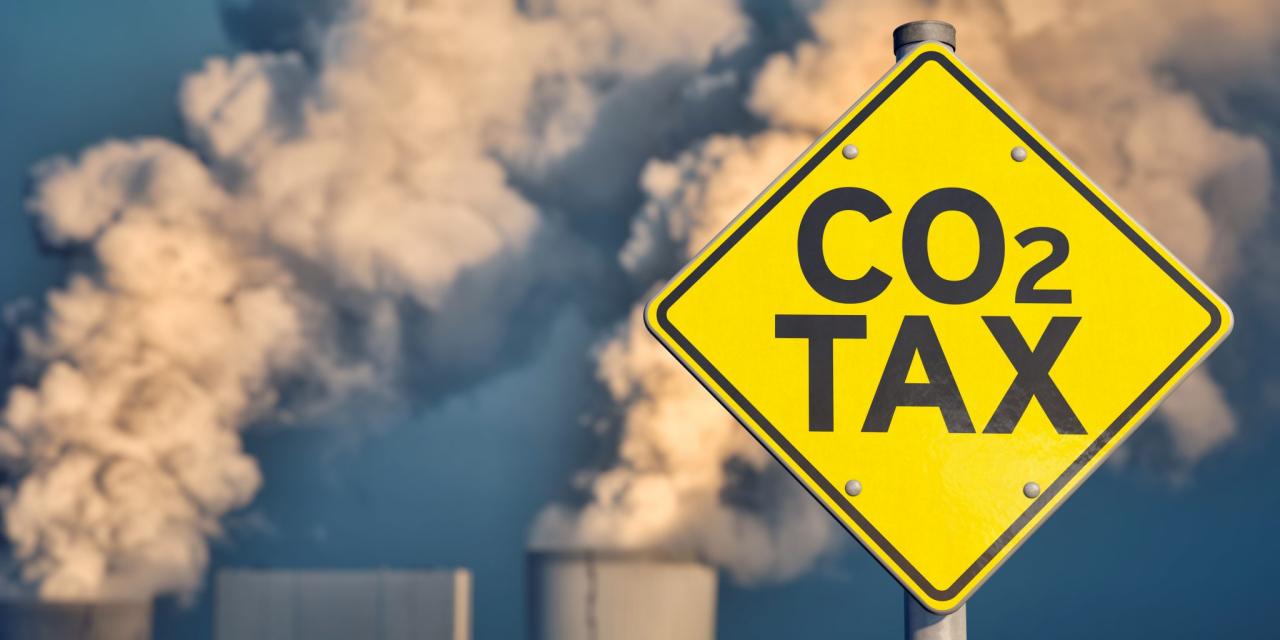
The scientific consensus on climate change is unequivocal: to avert a global catastrophe, we must drastically reduce carbon emissions. Faced with this urgent imperative, governments and international bodies are turning to economic instruments as powerful tools to drive change. Among these, the carbon tax has emerged as a cornerstone policy, designed to make polluters pay for the environmental damage they cause. By assigning a financial cost to carbon emissions, the tax creates a market-based incentive for businesses and consumers to reduce their carbon footprint. However, the implementation of a carbon tax, particularly on a global scale, is not just a matter of economics; it is a complex and contentious legal battleground.
This legal battle is fought on multiple fronts, from the highest courts of sovereign nations to the negotiating tables of international trade organizations. It pits the fundamental principles of environmental protection against entrenched economic interests, national sovereignty, and the intricate rules of global commerce. The outcome of these legal clashes will not only determine the effectiveness of carbon pricing mechanisms but also shape the future of climate policy for decades to come. This article will provide a comprehensive guide to the legal conflicts, the landmark cases, and the profound questions of justice and sovereignty that define the global carbon tax debate.
The Carbon Tax Explained
At its core, a carbon tax is a levy on activities that produce carbon dioxide (CO2) emissions. It is a form of Pigovian tax, designed to internalize the external cost of pollution—the societal harm caused by climate change that is not reflected in the price of a product. The tax can be applied at various points in the supply chain, such as on the extraction of fossil fuels, the generation of electricity, or the final consumption of gasoline.
The primary goal of a carbon tax is to change behavior. By making fossil fuels more expensive, it encourages a shift towards cleaner energy sources, promotes energy efficiency, and stimulates investment in green technologies. Unlike a cap-and-trade system, which sets a limit on emissions and allows companies to trade permits, a carbon tax sets a fixed price on emissions, providing businesses with greater certainty for long-term planning. The revenue generated can be used in a number of ways, from funding green initiatives and a universal basic income to cutting other taxes, each with its own legal and political implications.
Major Legal and Economic Battlefronts
The implementation of carbon taxes has been met with fierce legal challenges, raising a host of fundamental questions that require resolution by courts and international bodies.
A. International Trade Law Conflicts (CBAM):
One of the most significant legal battlefronts is on the global stage, specifically related to the concept of a Carbon Border Adjustment Mechanism (CBAM). Countries and regions that implement a high carbon tax fear that it will put their domestic industries at a competitive disadvantage. Companies might move their manufacturing to countries with no or a lower carbon tax, a phenomenon known as “carbon leakage.” To combat this, they propose a CBAM—a tariff on imports from countries with lax climate policies, which would be equivalent to the carbon tax paid by domestic producers.
- The Legal Challenge: This mechanism is a legal minefield. Opponents, particularly developing nations, argue that a CBAM is a form of disguised protectionism that violates the principles of the World Trade Organization (WTO). They contend that it is a discriminatory trade barrier that punishes their industries while providing an unfair advantage to countries with more developed, cleaner economies. The legal debate centers on whether climate action constitutes a legitimate exception to core WTO rules against trade barriers.
B. Domestic Constitutional and Legislative Challenges:
Within national borders, carbon taxes often face legal challenges based on constitutional law and the division of powers.
- Tax vs. Regulation: A common legal argument is whether a carbon tax is a legitimate “tax” designed to raise revenue or a “regulation” designed to change behavior. This distinction is critical because in many jurisdictions, the government’s power to implement a tax is different from its power to enact regulations. Opponents argue that a carbon tax is an unconstitutional overreach of power, while proponents argue it is a valid and necessary tool for public welfare.
- Federal vs. State Authority: In countries with a federal system, a key legal battle is over whether the federal government has the authority to impose a carbon tax on provinces or states. This issue has been central to legal battles in Canada and the United States, where provincial or state governments have challenged the federal government’s right to enforce a nationwide carbon price.
C. Social Equity and Justice Issues:
The legal debate around a carbon tax is not just about economics and law; it is also about social justice.
- Regressive Impact: A major legal and political concern is the regressive impact of a carbon tax. Since low-income households spend a larger portion of their income on essential goods like fuel and electricity, a carbon tax can disproportionately harm them. This has led to legal challenges on the grounds of social equity and has prompted policymakers to design “revenue-neutral” carbon tax models, where the tax revenue is returned to citizens in the form of rebates or tax cuts, a legal concept known as a “carbon dividend.”
- Distributive Justice: Legal disputes also arise over how the revenue is used. Should the money be given back to citizens? Invested in public transit in low-income communities? Or used to subsidize green energy for large corporations? The legal and ethical questions of distributive justice are at the heart of the carbon tax debate.
D. Tax Law and Revenue Use Disputes:
A carbon tax is, by its very nature, a tax. This brings it under the scrutiny of existing tax laws.
- Legal Scrutiny of Revenue Use: Lawsuits can challenge the legality of how the government plans to use the revenue. Is the revenue being used for the stated environmental purposes, or is it simply being funneled into general government funds? This can lead to legal battles over the transparency and accountability of the tax revenue.
Case Studies of Landmark Legal Battles

The abstract legal principles of the carbon tax debate have been tested in real-world courts, with landmark decisions setting important precedents.
- Canada’s Supreme Court Decision: In 2021, the Supreme Court of Canada delivered a landmark decision that affirmed the constitutionality of the federal government’s carbon tax. The court ruled that climate change is a matter of national concern and that the federal government has the authority to impose a national carbon price. This decision was a major victory for climate policy in Canada and established a legal foundation for similar measures in other countries with federal systems.
- Australia’s Repeal and The High Court: Australia was one of the first countries to implement a carbon price mechanism in 2012. However, it was repealed just two years later following a change in government and a fierce political and legal debate. While the legal challenges did not ultimately succeed in the High Court of Australia, the political backlash and public opposition led to the law’s demise, demonstrating that legal victory does not always guarantee policy success.
- The U.S. State-Level Initiatives: In the absence of a federal carbon tax, many U.S. states have taken action. Legal battles have erupted over initiatives in states like Washington and Oregon. These cases often center on ballot measure language, constitutional authority, and the role of the courts in environmental policy.
The Role of Climate Litigation
The legal battle over the carbon tax is part of a broader, global trend of climate litigation. In recent years, a growing number of lawsuits have been filed against governments and corporations for failing to take adequate action on climate change. These lawsuits, often filed by youth activists or environmental organizations, are increasingly forcing courts to recognize climate change as a legal harm that falls within their jurisdiction. The legal battles over the carbon tax are inextricably linked to this trend, as courts are being asked to rule on the legality of one of the most powerful tools available to governments to address climate change.
This new wave of climate litigation is forcing a re-evaluation of legal principles, from the duty of care that a government owes its citizens to the responsibilities of corporations for their emissions. The legal battles over a carbon tax are a direct extension of this trend, as they test the limits of legislative power and the role of the courts in enforcing climate action.
Conclusion
The global debate over carbon taxes is a microcosm of the larger, existential struggle to address climate change. It is a testament to the idea that a world-changing policy cannot simply be enacted; it must be debated, challenged, and ultimately justified within the existing frameworks of law and justice. The legal battles that have erupted are a necessary and inevitable part of this process. They are a reflection of a society grappling with the profound questions of who should pay for pollution, who has the authority to make those decisions, and how to ensure that the transition to a low-carbon economy is both effective and equitable.
The outcome of these legal battles will have a far-reaching impact. A ruling that affirms the constitutionality and legality of a carbon tax can provide a powerful precedent for other countries, creating a cascade effect that accelerates global climate action. Conversely, a legal setback could embolden opponents and set back progress for years. The challenges are formidable, from the complexities of international trade law to the deeply held convictions about national sovereignty and social justice.
Ultimately, the future of our planet hinges on our ability to navigate this legal battlefront with foresight, wisdom, and a commitment to justice. The legal frameworks we establish now will not only govern the policies of today but will also lay the groundwork for a more resilient and sustainable future. The legal battles over the carbon tax are a reminder that the law is not just a tool for settling disputes; it is a powerful instrument for shaping our collective destiny, and in the fight against climate change, it has never been more important.






Discussion about this post